
Author: Jay Juntti
-
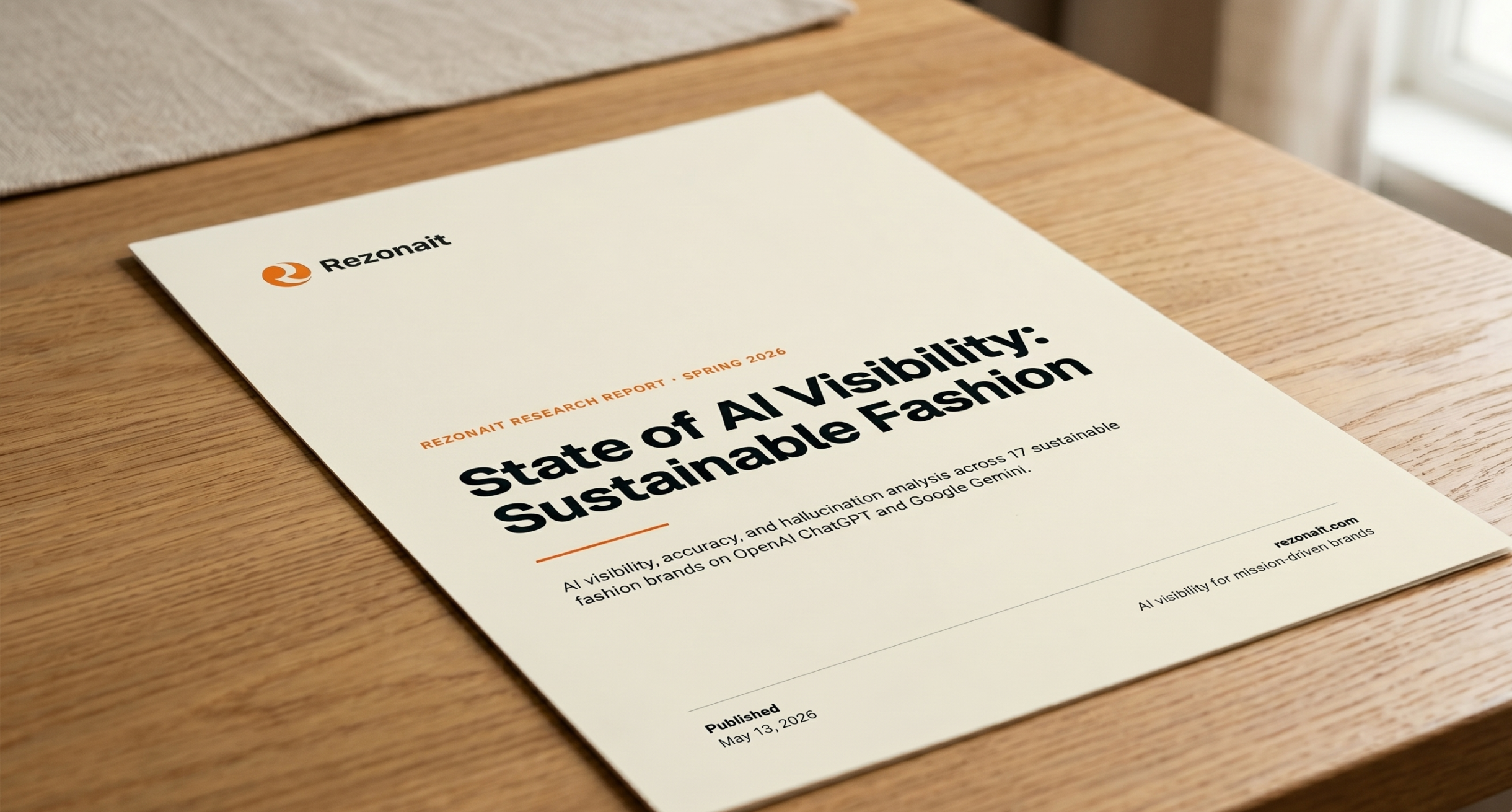
State of AI Visibility: Sustainable Fashion
By
This report presents findings from our audit of 17 sustainable fashion brands across the two AI platforms most consumers actually use: OpenAI’s GPT-4o and Google’s Gemini 3 Flash. Each brand was tested using a layered query methodology that simulates how real consumers discover, evaluate, and compare brands through AI conversation, and how those conversations affect…
-

Where the Water Goes
By
The shift from traditional search to AI-powered discovery has been building for the past two years. But in the span of just a few months — from late 2025 through early 2026 — BCG, Gartner, McKinsey, Adobe, Salesforce, and Forrester each released findings that, taken together, suggest this is no longer an emerging trend. It’s…
-

Ethical Brand Visibility: Closing the Gap for Purpose-Driven Companies
By
For the last 20 years, the goal of digital marketing for ethical brand visibility was simple: Ranking. If you were on Page 1 of Google, you won. Even if you were result #4 or #5, users would still see your name, click your link, and read your story.
-

AI and Sustainability Reports: Why PDFs Are the Dangerous “Silent Killer” of Visibility
By
You spent six months and significant budget auditing your supply chain, verifying your carbon offsets, and designing a beautiful 80-page Impact Report. But there is a problem. The standard format for ESG, ethics, or sustainability reports—the PDF—is essentially ‘dark matter’ to Large Language Models (LLMs) like ChatGPT and Claude. When it comes to AI and…
-

Monte Carlo Simulation in Marketing: A Guide to Better AI Search Visibility
By
Most marketing teams consider AI to be a search engine. They type in a prompt—”What are the best sustainable coffee brands?”—and they accept the answer as fact without realizing the value of a Monte Carlo simulation in marketing. If their brand appears, they celebrate. If it doesn’t, they panic.